

The Anatomy of a Funded Pitch: The Technical Founder's Guide to the Investor Mindset
Let’s be completely honest: the venture capital landscape has undergone a seismic shift.
With AI tools dropping the barrier to technical execution, features that used to take six months of grueling dev time can now be deployed in a matter of days. Investors are drowning in the resulting market noise. Because of that, they are looking right past raw concepts or basic software prototypes. They don't just want to see an interesting product; they want an airtight business model, defensible traction data, and a founder who knows how to defend it under pressure.
When growth-stage founders and executives come to Creative Blue, they know their technology better than anyone. But stepping out of the dev sandbox and preparing to raise a Series A or Series B round requires a completely different muscle group: the art of venture capital storytelling.
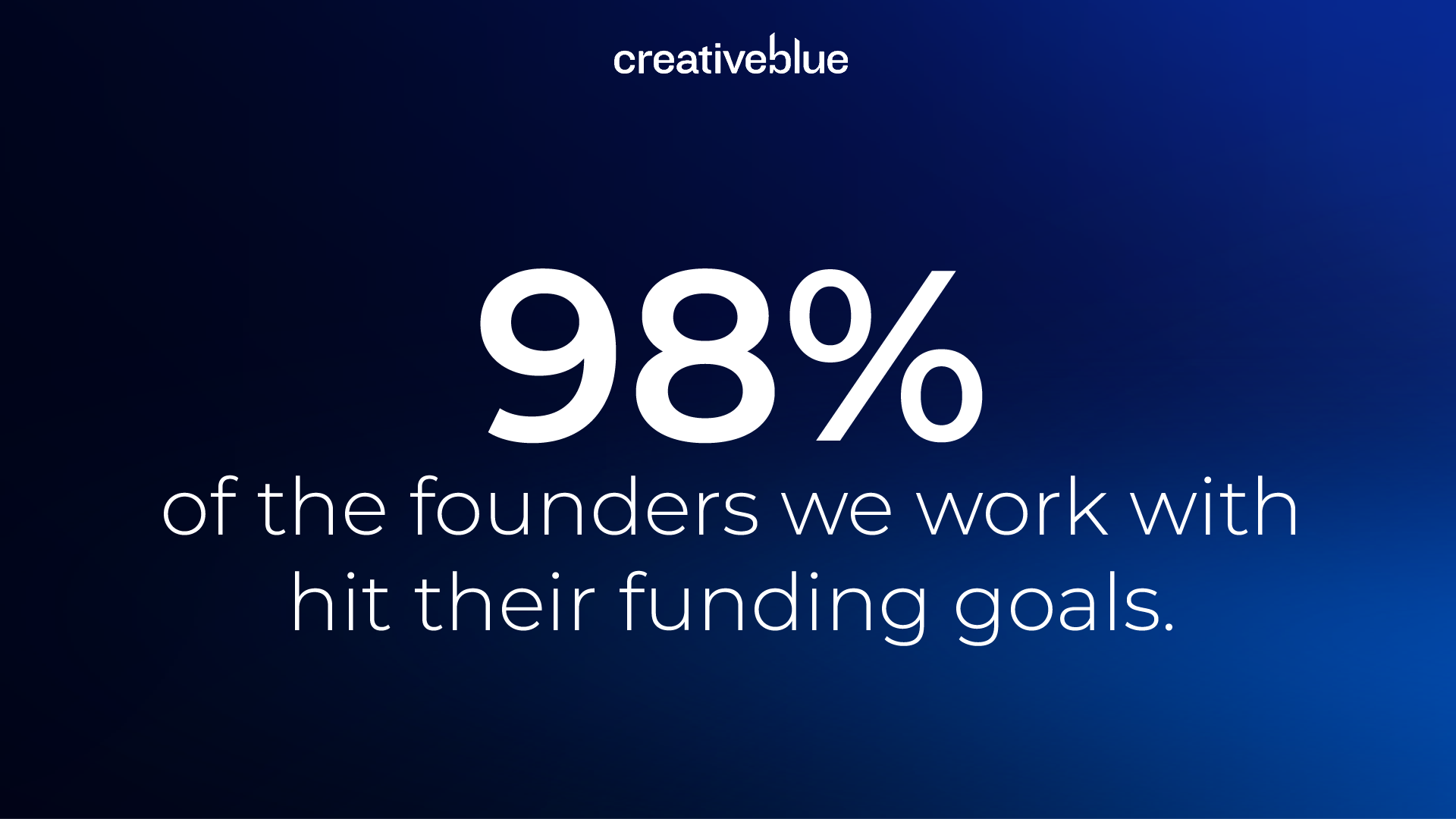
There’s a reason why 98% of the founders we coach successfully close their funding rounds. It’s not a fluke; it’s Core Story. Make no mistake, a high-impact pitch deck is a crucial operational asset. But the slides are secondary. The real reason our founders succeed is because we partner with them to hone their foundational narrative before we even think about moving into pitch coaching sessions.
The key is taking technical genius and translating it into a commercial narrative that directly targets how an institutional investor thinks. It isn’t just about presentation practice. Our ultimate goal is to train you to close a multi-million dollar round over coffee, hitting every single strategic beat with unshakeable authority—with or without a screen.
Key Takeaways
Commercial Authority Over Technical Detail: Investors back founders who articulate enterprise value and market scale, not just elegant product mechanics.
Conversational Expertise: The methodology of translating complex technical architecture into a high-level commercial narrative VCs can act on immediately.
Core Narrative Architecture: A winning Series A narrative relies on a quantified problem statement, go-to-market scalability, and a defensible competitive moat.
Unit Economics & LTV: Shifting from flat subscription pricing to usage-based frameworks unlocks higher customer lifetime value and justifies premium valuations.
Unscripted Readiness: Live pressure-testing builds the executive grit and presence required to navigate due diligence and close institutional capital.
Conversational Expertise: Translating Technical Architecture into Investor Readiness
Brilliant innovators naturally focus on the mechanics of what they’ve built. If you’ve designed a sophisticated document-processing platform, your immediate instinct is to spend thirty minutes explaining your data extraction accuracy, technical architecture, and compliance layers.
Meanwhile, the venture partner on the other side of the table is filtering everything through a cold, macro lens: "How does this translate into exponential market scale? How does this model capture sustainable revenue?"
We help founders bridge this gap through a methodology we call Conversational Expertise.
What is Conversational Expertise?
Conversational Expertise is the methodology of translating complex technical product architecture into a clear, high-level commercial narrative. It enables technical founders to pitch institutional investors, defend unit economics, and close multi-million dollar funding rounds without relying on slide decks or technical jargon.
Think of Creative Blue as your elite thinking partner. We elevate the presentation from what the technology is to what the technology enables economically.
We rewrite standard Series A pitch deck architecture to cover the exact building blocks VCs look for to de-risk an investment:
A Relatable, Quantified Problem Statement: We help you isolate the exact financial pain, operational drag, or market inefficiency your platform solves. Instead of abstract complaints, this pillar grounds your pitch in hard economic validation, showing venture partners precise metrics on the capital baseline your customers lose every day without your software.
Market Opportunity & Go-to-Market Scalability: Defining a multi-billion-dollar Total Addressable Market (TAM) is easy, but investors care about your immediate Serviceable Obtainable Market (SOM). We map out your precise beachhead entry strategy, customer acquisition channels, and expansion loops to prove that capturing market share is an execution process rather than wishful thinking.
Irresistible & Defensible Product Differentiation: Having a superior user interface is not a moat. We work with you to articulate why your technical architecture, proprietary dataset, or workflow integrations create long-term switching costs, showing VCs why deep-pocketed incumbents cannot simply out-budget or copycat your product next quarter.
The 4 Trap Doors That Kill Technical Pitches
When we audit early pitch decks and run live coaching sessions, these are the four common missteps our team helps you avoid:
Mistaking Visual Polish for Narrative Power: A slick, impactful deck is great, but getting bogged down in specific design details isn’t the best way to prepare to pitch. If your story doesn't hold up over a cup of coffee without screens, high-end typography won't save you when a partner interrupts on slide two to challenge your unit economics.
Failing to Frame the Business as a Broader Solution Set: Technical founders often get so hyper-focused on solving one specific workflow problem that it begins to sound like they’re pitching a niche product. If investors can't see how your platform expands into adjacent markets, unlocks platform ecosystems, or absorbs broader category spend, they will write you off as a feature waiting to be swallowed by an incumbent.
Underestimating the Mechanics of Business Scalability: Showing a bottom-up graph that goes up and to the right isn't proving scalability. VCs need to see the underlying growth engine: your customer acquisition efficiency, payback periods, expansion loops, and net revenue retention. If you can't clearly articulate how adding capital directly accelerates scalable revenue without breaking operational capacity, you won't close the round.
Drowning the Room in Plumbing Instead of the House: When engineers build something incredible, their instinct is to explain every detail under the hood. Spending thirty minutes walking through algorithm design, pipeline latency, and data layers forces the investor into the role of a CTO auditing code rather than a partner evaluating enterprise value. The goal isn't to hide your technical genius; it's to elevate the conversation to what that technology enables economically.
Investor Deck Architecture: Shifting from Product to Platform Value
I remember working with a brilliant founder whose AI platform tackled massive operational inefficiencies in a multi-trillion-dollar sector. In his early drafts, his commercial plan relied entirely on a traditional, flat SaaS subscription model.
During our strategy sessions, we looked at the unit economics together. I flagged a key consideration: in a niche market with a finite number of target enterprise clients, capping an elite, high-value asset at a flat monthly rate limits how much customer Lifetime Value (LTV) you can capture from each account. That narrower margin, in turn, makes it harder to justify a premium pre-money valuation to investors weighing your growth math.
We rebuilt his financial narrative around a usage-based execution framework—demonstrating exactly how the business could capture a micro-percentage of every single transaction it optimized. When he brought that refined business model to market, it completely transformed his conversations with institutional investors because it matched their specific criteria for hyper-growth potential.
The takeaway? Building an investable pitch isn't just about reading sheet music; it's about performing with the authority of a master composer. We give founders the structured cadence and raw confidence needed to own the room.
Projecting Agility, Execution, and Grit
When venture capital firms evaluate a growth-stage company, they look to see if the leadership team has the capacity to handle real velocity. They know that building a company is an unpredictable, messy process. Market dynamics shift overnight, and product roadmaps have to adapt to real-world feedback. Investors aren't looking for static playbooks; they want the grit, resourcefulness, and founder-market fit required to steer an organization through rapid growth.
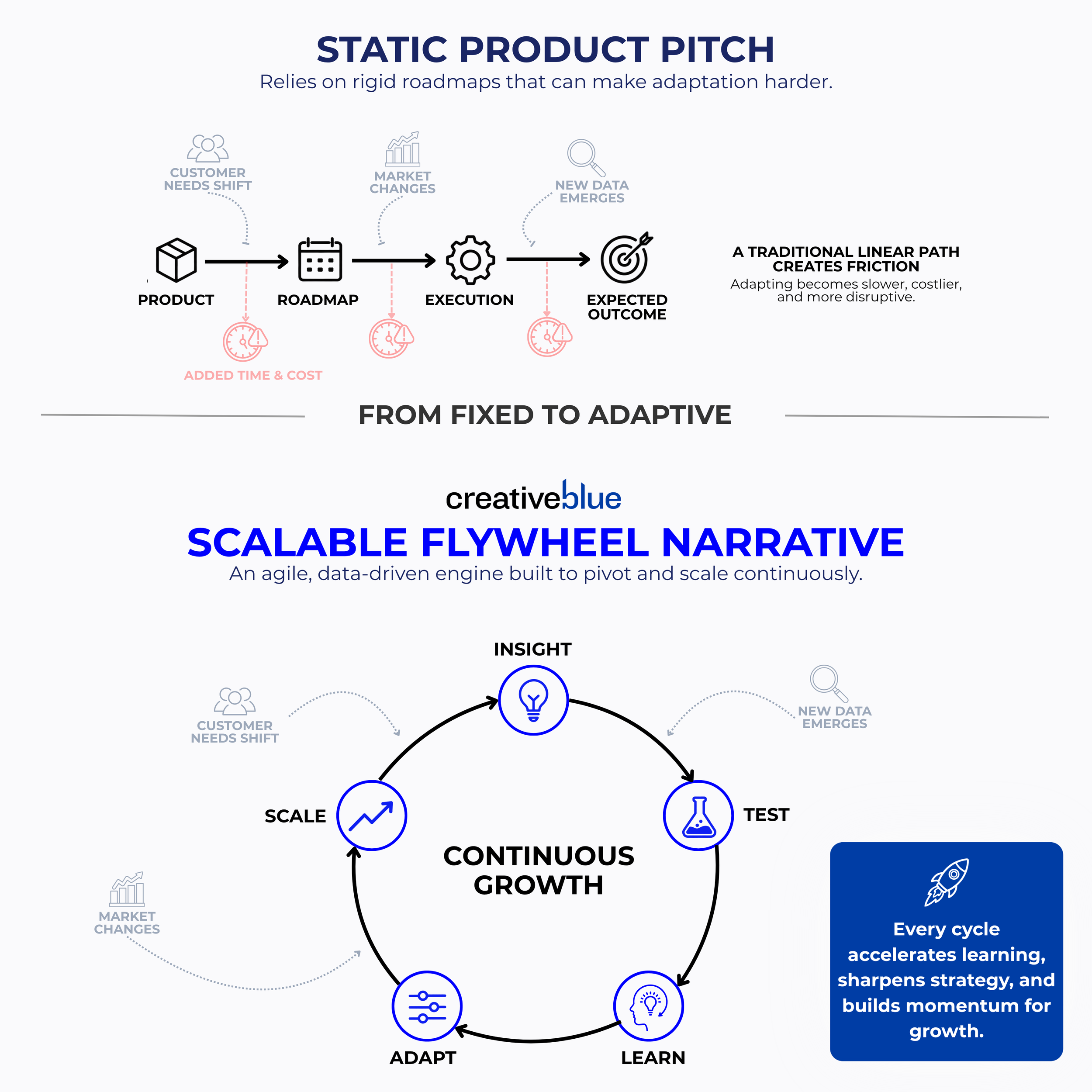
Our pitch coaching for startups and live rehearsal process brings out that natural executive presence. We don't do soft practice runs. We actively pressure-test your messaging, audit your traction slide, and simulate the complex, uncomfortable operational and due diligence questions you will face when negotiating a term sheet, discussing capital efficiency, or explaining product workflows.
When you can step up and clearly articulate how your strategy effortlessly feeds your creative execution, investors see a leader who is fully prepared to deploy institutional capital effectively from day one.
Owning the Room and Securing the Round
At Creative Blue, our relationship with early and growth-stage companies is built on a very simple foundation: we don't view a capital raise as a standalone, transactional project. Navigating an investor pitch and closing a successful funding round isn't just about survival—it's about setting the standard for your company’s entire future trajectory.
We help you secure the confidence of your investors by shifting the conversation from a basic technical pitch to an undeniable commercial outcome.
If you are a founder ready to elevate your commercial narrative and nail the art of investor readiness, let’s build that winning story together.
Connect with our team today, and let’s map out your capital strategy.
Frequently Asked Questions (FAQ)
Q: What is the difference between a product pitch and an investor readiness narrative?
A: A product pitch focuses primarily on technical features, product architecture, and user workflows. An investor readiness narrative focuses on commercial scalability, unit economics, defensible moats, and how institutional capital accelerates long-term market expansion.
Q: Why do technical founders struggle during Series A pitch presentations?
A: Technical founders naturally default to explaining how their product works rather than what it enables economically. Without a structured commercial narrative, institutional investors struggle to evaluate the go-to-market velocity or long-term enterprise value of the business.
Q: Why is pitch coaching so important in addition to pitch deck design?
A: Pitch deck design focuses on visual slides and graphic formatting, whereas pitch coaching trains executive presence, conversational authority, and live due diligence performance. Slides support the conversation, but pitch coaching ensures the founder can defend the business model with or without a screen.
